 Bach Database
Works › BWV 194
Höchsterwünschtes Freudenfest, BWV 194
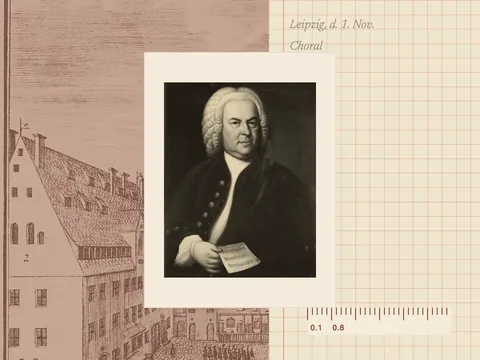
At a glance
BWV 194 is a church cantata for Trinity, dated 4 June 1724 as its source states it.
- RISM lists 19 manuscripts and early prints under BWV 194: one autograph, one partly autograph, 13 copies and four prints, held in 7 libraries.
- RISM lists five scribes of these sources, among them Kuhnau, Johann Andreas; Lindner, Johann Christian; Copyist Anon. If; and Krebs, Johann Tobias.
- It is named in C. P. E. Bach’s estate catalogue of 1790 (as Bach Digital cites it); the passages are quoted under Historical sources below.
- 4 other numbers share its base number in the catalogue: BWV 194.1, BWV 194.2, BWV 194.3 and BWV 194.4.
Sources for these lines
- Opening sentence: English Wikipedia · Wikipedia (en): Church cantata (Bach)
- Surviving sources, Scribes: RISM (CC BY 3.0); the list is under Manuscripts and early prints below
- Historical catalogues: Historical catalogues
- Related numbers: BWV list as on Works
Listen
Show 1 more chorales
Edition and credits
Played by your browser from a digital edition by Craig Stuart Sapp (bach-370-chorales, CC BY-NC-SA 4.0). The note data on this site is converted from it and carries the same licence. Repeats are not played. Sampled organ, piano and harpsichord: credits.
- “Freu dich sehr, o meine Seele” (no. 64): four parts; Craig Sapp’s edition heads it “BWV 194/6”.
- “Wach auf, mein Herz” (no. 93): four parts; Craig Sapp’s edition heads it “BWV 194/12”.
- “Jesu, deine tiefen Wunden” (no. 256): four parts; Craig Sapp’s edition heads it “BWV 194/6”.
- “Nun laßt uns Gott, dem Herren” (no. 257): four parts; Craig Sapp’s edition heads it “BWV 194/12”.
- Date
- 4 June 1724 · day page · 1724
Also stated: 1723; 1723How it is dated · source
The source gives an exact day.
What the date rests on: earliest documented performance (Trinity) in the en.wikipedia 'Church cantata (Bach)' list, listed there under 'First year in Leipzig'
What the other stated dates rest on:
- 1723: earliest securely dated original source (autograph): D-B Mus.ms. Bach P 43 (3) (RISM)
- 1723: catalogue date as stated
Source: Wikipedia (en): Church cantata (Bach) · CC-BY-SA-4.0 (en.wikipedia)
- Genre
- church cantata
- Key
- B-flat major
Source
IMSLP - Occasion
- Trinity
Source
English Wikipedia - Scoring and kind
- Church cantata for soprano, tenor, bass; mixed chorus (SATB), orchestra.
- Text
- Anonymous (Nos.1-5, 7-11); Johann Heermann (No.6); Paul Gerhardt (No.12) IMSLP
- “author unknown; mvt. 6: stanzas 6 and 7 from 'Treuer Gott, ich muss dir klagen' (1630) by Johann Heermann (1607–1676); mvt. 12: stanzas 9 and 10 from 'Wach auf, mein Herz, und singe' (1647/1653) by Paul Gerhardt (1585–1647); first libretto printing: Leipzig 1723” Bach Digital (for BWV 194.2), archived copy of 2018-09-15 · CC BY-NC
- “author unknown; Johann Heermann (1585–1647); Paul Gerhardt (1607–1676); Text: see BWV 194.2 [Störmthaler Fassung] / BC B 31” Bach Digital (for BWV 194.3), archived copy of 2018-08-09 · CC BY-NC
- “author unknown; Johann Heermann (1585–1647); Paul Gerhardt (1607–1676); see BWV 194.2 (BC B 31)” Bach Digital (for BWV 194.4), archived copy of 2018-08-10 · CC BY-NC
- Status
- Authentic
Basis
A work by J. S. Bach. - Historical sources
- C. P. E. Bach’s estate catalogue (Hamburg 1790), as Bach Digital cites it:
- BWV 194.2: NV 1790, S. 79 [2] (zusammen mit St 48, St 346) “ (----) ”
Cited by Bach Digital
As cited by Bach Digital on 1 record (CC BY-NC):
- Bach Digital source record D-B Mus.ms. Bach P 43, Faszikel 3 (archived copy of 2021-07-25)
- BWV 194.2: NV 1790, S. 79 [2] (zusammen mit P P 43, Faszikel 3) “ (----) Partitur und meist alle Stimmen.”
Cited by Bach Digital
As cited by Bach Digital on 1 record (CC BY-NC):
- Bach Digital source record D-B Mus.ms. Bach St 48, Faszikel 1 (archived copy of 2021-10-21)
- BWV 194.3: NV 1790, S. 79 [2] (zusammen mit P 43, Faszikel 3) “ (----) ”
Cited by Bach Digital
As cited by Bach Digital on 1 record (CC BY-NC):
- Bach Digital source record D-B Mus.ms. Bach St 346, Faszikel 2 External digital copy (archived copy of 2023-07-16)
- BWV 194.3: NV 1790, S. 79 [2] (zusammen mit P P 43, Faszikel 3) “ (----) Partitur und meist alle Stimmen.”
Cited by Bach Digital (3)
As cited by Bach Digital on 3 records (CC BY-NC):
- Bach Digital source record D-B Mus.ms. Bach St 48, Faszikel 1 (archived copy of 2021-10-21)
- Bach Digital source record D-B Mus.ms. Bach St 48, Faszikel 2 External digital copy (archived copy of 2023-07-16)
- Bach Digital source record D-B Mus.ms. Bach St 48, Faszikel 3 External digital copy (archived copy of 2023-07-16)
- BWV 194.2: NV 1790, S. 79 [2] (zusammen mit St 48, St 346) “ (----) ”
- Catalogue numbers
- BC A 91a-b, B 31 · NBA I/31, III/2.1, III/2.2 · BGA 29
- Cantata cycle
- Later and other / Other
In the calendar (3)
- BWV 194, originally a 1723 consecration cantata (see below), restaged in its first Leipzig version
- BWV 194, second Leipzig version with the movements in a different order, restaged 16 June 1726
- BWV 194, first Leipzig version, restaged 20 May 1731
Movements (12)
Show the 12 movements
- Chorus: Höchsterwünschtes Freudenfest
- Recitative (bass): Unendlich großer Gott, ach wende dich
- Aria (bass): Was des Höchsten Glanz erfüllt
- Recitative (soprano): Wie könnte dir, du höchstes Angesicht
- Aria (soprano): Hilf, Gott, dass es uns gelingt
- Chorale: Heilger Geist ins Himmels Throne
- Recitative (tenor): Ihr Heiligen, erfreuet euch
- Aria (tenor): Des Höchsten Gegenwart allein
- Duet Recitative (soprano, bass): Kann wohl ein Mensch zu Gott im Himmel steigen
- Duetto Aria (soprano, bass): O wie wohl ist uns geschehn
- Recitative (bass): Wohlan demnach, du heilige Gemeine
- Chorale: Sprich Ja zu meinen Taten
As listed by IMSLP.
Manuscripts and early prints: RISM (19)
About this list
- D-B Mus.ms. Bach P 43 (3) Autograph · 1723 · Bach Digital · source page
- D-B Mus.ms. Bach St 48 Partly autograph · 1723–1724 · Bach Digital · source page
Scribes: Kuhnau, Johann Andreas; Lindner, Johann Christian; Copyist Anon. If - D-LEb ohne Signatur Copy · 1700–1799
Scribes: Krebs, Johann Tobias - US-BEm MS 1402 Copy · 1780 · movement 12 only
Scribes: Penzel, Christian Friedrich - D-Bhm RH 2023 Copy · 1910–1923 · movement 12 only
- D-B Am.B 46/II (248) Copy · movement 12 only
- D-B Am.B 46/II (283) Copy · movement 6 only
- D-B Am.B 46/II (285) Copy · movement 12 only
Show 11 more
- D-B Am.B 48 (18) Copy · movement 6 only
- D-B Am.B 48 (19) Copy · movement 12 only
- D-Bhm RH 0745 Copy · movement 6 only
- D-Bhm RH 0745 Copy · movement 12 only
- D-GOl Mus. 4˚ 62a/4 Copy · movement 12 only
- D-WRha Mus.ms. B 164 Copy · movement 6 only
- D-WRha Mus.ms. B 164 Copy · movement 12 only
- A-Wgm [no indication] Print · movement 6 only
- A-Wgm [no indication] Print · movement 12 only
- A-Wgm [no indication] Print · movement 6 only
- A-Wgm [no indication] Print · movement 12 only
Source pages: Bach Digital (16)
About this list
- A-Wgm I 1724 (Q 20705) [= Choralsammlung] Score, collective manuscript · Ende 18. Jh.
- D-B 4° Mus. Tb 64/10 Libretto, print · um 1723
- D-B Am.B 46/II, Faszikel 3 (bzw. Faszikel 2a) [= Choralsammlung] Score, collective manuscript in convolute · zwischen 1776 und 1783
- D-B Am.B 48 [= Choralsammlung] Score, collective manuscript · unknown
- D-B Mus. ms. Bach St 346, Faszikel 1 Stimme/Stimmen, Einzelhandschrift im Konvolut · Aufführungsdatum vor November 1723 vermutlich in Köthen
- D-B Mus. ms. Bach St 346, Faszikel 3 Stimme/Stimmen, Einzelhandschrift im Konvolut · um 1725-1726
- D-B Mus. ms. Bach St 346, Faszikel 4 Stimme/Stimmen, Einzelhandschrift im Konvolut · WZ belegt zwischen 1746 und 1764
- D-B Mus.ms. Bach P 43, Faszikel 3 Score, single manuscript within composite manuscript (Original source) · Aufführungsdatum 2.11.1723 (?31.10)
Show 8 more
- D-B Mus.ms. Bach St 48, Faszikel 1 Part(s), single manuscript within composite manuscript (Original source) · Aufführungsdatum 02.11.1723 (oder 31.10.1723?)
- D-B Mus.ms. Bach St 48, Faszikel 2 Part(s), single manuscript within composite manuscript (Original source) · Aufführungsdatum 4.6.1724 [und 20.5.1731; s. Faszikel 3]
- D-B Mus.ms. Bach St 48, Faszikel 3 um 1727-31; wahrscheinlich Aufführungsdatum 20.5.1731 (vgl. Textdruck)
- D-B Mus.ms. Bach St 346, Faszikel 2 Part(s), single manuscript within composite manuscript (Original source) · Aufführungsdatum 4.6.1724 [und 20.5.1731; s. St 48, Faszikel 3]
- D-LEb DL Crimmitschau (Depositum im Bach-Archiv) Score, single manuscript · vor 1750
- D-LEm I. B. 2c [Textdruck] Libretto, print (Original source) · 1731
- D-LEm II. 1. 4° 59-60 [= Choralsammlung, Druck Breitkopf] Score, print · Erster Theil: 1784, Zweyter Theil: 1785, Dritter Theil: 1786, Vierter Theil: 1787
- D-LEm II. 1. 4° 103 [= Choralsammlung, Druck 1832] Score, print · 1832 (Vorwort 09.12.1831)
Other versions and numbers
- BWV 194.1 Secular cantata model for church cantata versions of BWV 194 (incomplete) c. 1717 to 1723
- BWV 194.2 Cantata Höchsterwünschtes Freudenfest ( Störmthal version: consecration of church and organ) 2 November 1723
- BWV 194.3 Cantata Höchsterwünschtes Freudenfest (Trinity; 1st Leipzig version) 1724 to 1731
- BWV 194.4 Cantata Nun lasst uns Gott, dem Herren ? (Trinity; 2nd Leipzig version) 16 June 1726
Cite this page
Ethan Blackburn, “Höchsterwünschtes Freudenfest, BWV 194”, Bach Database, https://bachdatabase.com/bwv/194 (data version 2026-11-19+06cb719046; accessed [date]).
Cite the original source named in each row first; cite this page for the compilation. Replace [date] with the day you read the page. More on citing and reusing the data.
BibTeX
@misc{bachdatabase-bwv-194,
  author = {Blackburn, Ethan},
  title = {{Höchsterwünschtes Freudenfest, BWV 194}},
  howpublished = {\url{https://bachdatabase.com/bwv/194}},
  organization = {Bach Database},
  year = {2026},
  note = {Data version 2026-11-19+06cb719046; accessed [date]}
}
CSL-JSON
{"id": "bachdatabase-bwv-194", "type": "webpage", "title": "Höchsterwünschtes Freudenfest, BWV 194", "author": [{"family": "Blackburn", "given": "Ethan"}], "container-title": "Bach Database", "URL": "https://bachdatabase.com/bwv/194", "issued": {"date-parts": [[2026, 11, 19]]}, "version": "2026-11-19+06cb719046"}